A Complete Guide for Families of All Faiths and Backgrounds
Losing someone we love is one of the hardest experiences any of us will face. When the cremation has taken place and the first days of grief begin to settle, many families find themselves dealing with a practical question they have never had to answer before: how do we organise a memorial gathering after cremation that truly honours the person we have lost?
Whether your family follows a particular religious tradition or none at all, planning a meaningful post-cremation gathering involves the same core decisions. Where do we gather? How do we accommodate everyone who wants to come? What does our ceremony require? And how do we make sure the space feels right for this moment?
This guide is here to help you answer those questions clearly and calmly. There are no promotional messages here – only honest, practical information drawn from years of experience working with families from many different cultural and religious backgrounds in the Netherlands.
1. What Is a Memorial Gathering After Cremation?
A memorial gathering after cremation is a community event held to mourn, remember, and celebrate the life of someone who has passed away. It brings together family, friends, neighbours, and community members to offer support to those who are grieving and to honour the person who has gone.
These gatherings take many forms depending on culture, tradition, and personal preference. Some are formal ceremonies with prayers, readings, and devotional music. Others are informal receptions where people share a meal, tell stories, and simply sit together. Many combine both.
What they all share is a common purpose: to give people a space to grieve together. Communal mourning – being physically present with others who share your loss – plays a vital role in the healing process.
2. Types of Memorial Gatherings
Understanding what type of gathering your family wants to hold is the first step in planning it well. Different traditions approach this differently, but the underlying needs are very similar.
Formal Ceremony or Service
Many families hold a structured ceremony with a clear order of events: prayers or readings, tributes from family members, devotional music, and a moment of collective silence or reflection. These events require a venue that can be arranged to feel reverent, with enough seating and good acoustics.
Condolence Reception
In many communities, the days following a cremation involve an open gathering where friends and extended family come to offer condolences in person. Guests may arrive and depart over several hours, food is offered, and the atmosphere has a quality of warmth and togetherness.
Celebration of Life
A celebration of life is a growing format for families who want to honour the personality, achievements, and favourite memories of the person they have lost. These gatherings often feature photographs, personal stories, meaningful music, and a more relaxed environment.
Community and Cultural Ceremonies
Many communities observe specific ceremonies on particular days after a death – the third day, seventh day, thirteenth day, fortieth day, or another meaningful date. These gatherings often hold deep spiritual significance and may involve community prayers, shared meals, and the participation of a religious leader or elder.
3. How to Choose the Right Venue
Choosing a venue for a memorial gathering is not the same as choosing one for a celebration. You need a space that feels respectful and calm, gives people room to grieve, and can support the practical needs of your ceremony without adding stress.
Capacity and Flexibility
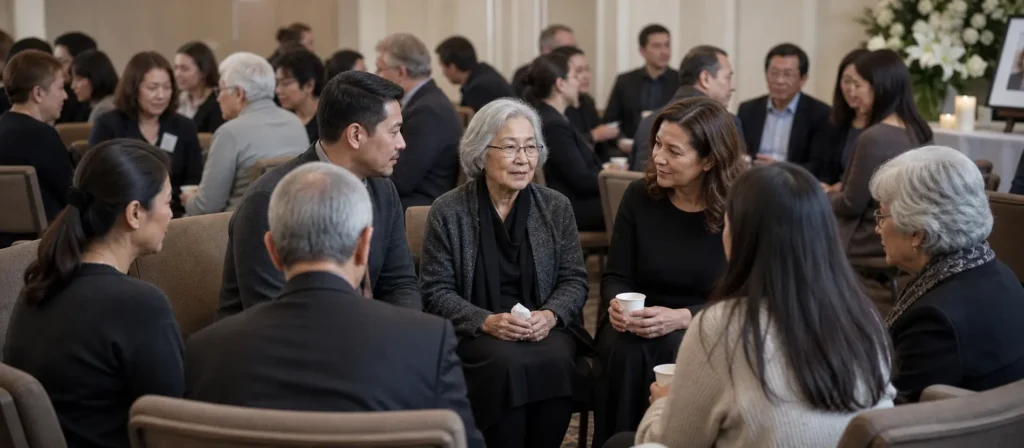
Think carefully about how many people you expect. In many communities, post-cremation gatherings draw large numbers: extended family, neighbours, colleagues, and community members who all wish to pay their respects. A gathering of 150 to 300 people is not unusual.
A venue that is too small creates discomfort and stress. But a very large space can feel cold for a smaller gathering. Ask not just about maximum capacity, but about flexibility: can the space feel warm for 60 people and still open fully for 250?
Key Capacity Questions to Ask
- What is the maximum number of guests you can seat comfortably?
- Can the room be set up in different configurations?
- Is there a separate reception area for arriving guests?
- Do you have outdoor space for overflow or quiet moments?
- Have you hosted large community gatherings before?
Accessibility for All Guests
Memorial gatherings bring together people of all ages and physical abilities. Elderly grandparents, young children, and guests with mobility challenges all need to feel welcomed and comfortable.
- Step-free access at all entrances
- Lift access if the venue has more than one floor
- Accessible and clearly signposted toilet facilities
- Adequate parking, including spaces for guests with accessibility needs
- Easy access by road and public transport
- A quiet room where family members can take a private moment
Parking
Parking is something many families underestimate until the day itself. A gathering of 200 guests requires significant parking. Guests who cannot find a space may arrive stressed or late, which adds pressure to an already emotional day.
Atmosphere
Pay attention to how the space feels when you walk in. For a memorial gathering, you want a venue that is clean, neutral, and calm – not one that still carries the energy of a recent party or corporate event. Good lighting, good acoustics, and a respectful team make an enormous difference.
4. Respecting Your Ceremony’s Requirements
This is one of the most important conversations you will have with any potential venue. A venue experienced in cultural and community ceremonies will be ready for these questions; one that is not will become obvious quickly.
Prayer and Ceremony Space
Many memorial ceremonies require dedicated space for prayer or ritual. This might mean rearranging furniture, creating a clear focal point at the front of the room, or leaving an open central area for a ceremony.
Devotional Music and Sound
Music plays a central role in many memorial ceremonies. Whether it is live devotional music, recorded songs, a choir, or a small group of musicians, sound quality matters. Ask about the PA system, microphones, and rules for live performances.
Candles, Flowers, and Ceremonial Items
Many traditions involve candles, oil lamps, flowers, garlands, incense, or other ceremonial items. Not all venues permit open flames or incense indoors because of safety and insurance rules, so ask clearly before booking.
Catering and Shared Meals
Sharing a meal is an act of community, generosity, and care in almost every culture. For many families, providing food at a memorial gathering is a meaningful part of the ceremony itself.
Catering Questions to Ask Your Venue
- Can you accommodate specific dietary requirements for all guests?
- Can you work with an external caterer?
- Can we bring home-prepared food from our community?
- Can food be served buffet-style or as a seated meal?
- Can different dishes be clearly separated for guests with different requirements?
5. Practical Arrangements: A Family Checklist
Once you have chosen a venue, the following checklist will help you make sure everything is organised before the day of the gathering. In the days immediately after a bereavement, it is easy to lose track of details; a clear list makes the process more manageable.
In the Week Before
- Confirm the date, start time, and duration of your booking
- Agree on the room layout with the venue
- Confirm catering arrangements and dietary requirements
- Share directions, parking information, and arrival details with guests
- Arrange audio-visual equipment such as a microphone, projector, or sound system
- Inform the venue of flowers, candles, photographs, or ceremonial objects
- Confirm your dedicated contact person at the venue
- Prepare a simple printed explanation if guests speak different languages
On the Day
- Arrive at least one hour before guests to set up and check the space
- Designate a trusted person to greet guests at the entrance
- Ask a small group to assist elderly or mobility-impaired guests
- Have water and light refreshments available from the start
- Keep a quiet room available for family members who need privacy
- Have a printed programme or order of events available
6. Supporting Guests Through Their Grief
A memorial gathering is not just a logistical event; it is an emotional one. As the person organising it, there are small choices that can help guests feel genuinely supported and welcomed.
Creating a Warm Environment
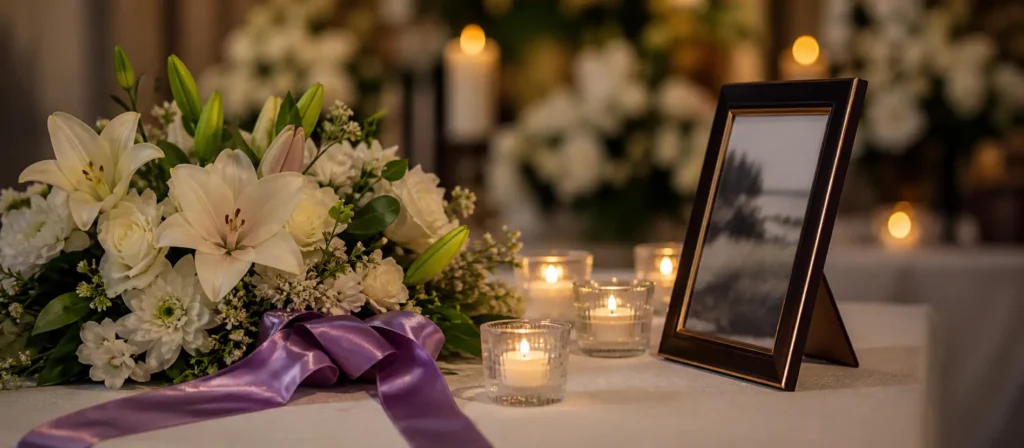
Soft lighting, fresh flowers, candles, and photographs of the person who has passed all help create an atmosphere of warmth and remembrance. A dedicated memory table gives guests a place to focus their feelings and feel connected to the person they are honouring.
Welcoming Guests From Different Backgrounds
Some guests may not be familiar with your tradition’s customs. A simple printed sheet explaining what to expect, when to sit or stand, and whether there is a moment for personal tributes helps everyone feel included.
Things That Help Guests Feel Welcome and Supported
- A guest book for personal memories or messages
- Printed photographs near the entrance
- A simple printed programme
- Tissues placed throughout the space
- A quiet corner with chairs
- Clear signage for toilets, parking, and the main hall
- Water and light refreshments available from the start
- A dedicated greeter at the entrance
7. Why a Dedicated Hall Often Works Better Than Home
Many families naturally begin by thinking of holding the memorial gathering at home. Home feels personal and familiar, but for gatherings of more than 30 or 40 people, a domestic space quickly becomes impractical.
A home cannot easily accommodate parking, chairs, catering volumes, or guests arriving in waves over several hours. The family may end up managing logistics rather than being present with the people who have come to offer support.
This is why many families choose a dedicated hall or event space. A hall gives you control over room layout, catering, timing, and atmosphere without the limitations of a home setting.
What to Look For in a Hall
- A neutral, flexible space that can be adapted to your ceremony
- Catering that can accommodate the needs of your community
- Adequate parking, ideally free and on-site
- A team with experience in cultural and community events
- Good acoustics for prayers, music, and speeches
- Facilities for formal seated ceremonies and informal receptions
- A respectful staff team that understands the sensitivity of the occasion
When families from the greater Amsterdam area are looking for a venue large enough and flexible enough for a memorial gathering, Uithoorn is practical and well connected. It is approximately 20 to 25 minutes from central Amsterdam by road and typically offers far more free parking than city-centre alternatives.
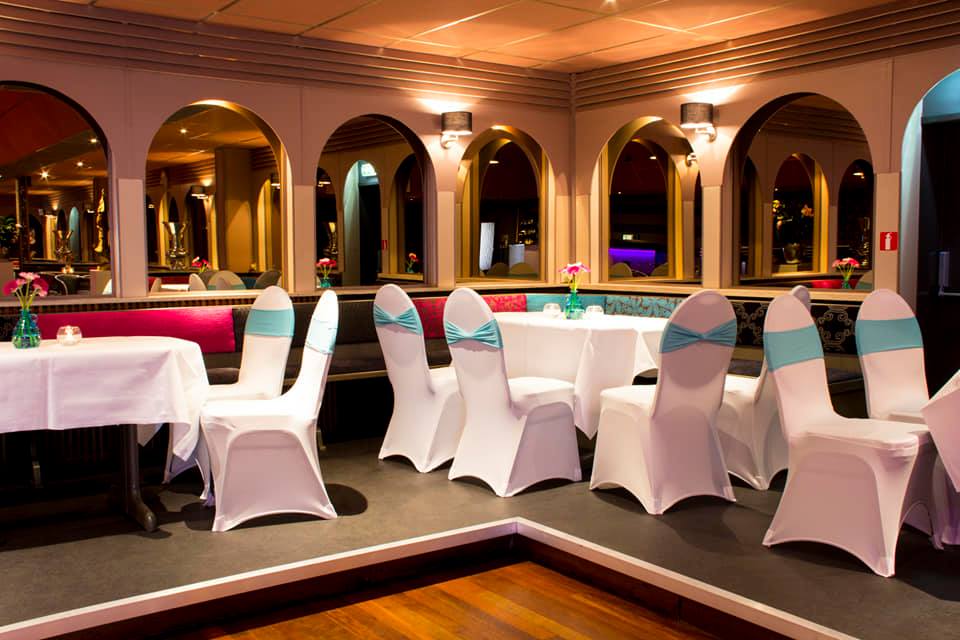
At Oasis Party & Events in Uithoorn, the main hall accommodates up to 300 guests across flexible spaces. The team has welcomed families from many cultural and religious backgrounds and understands how to create the right environment for a sensitive occasion.
Final Thoughts
Planning any gathering while grieving is hard. There is no perfect way to do it, and the people who love you will understand that. What matters most is that you have created a space where people can come together, feel less alone, and remember the person they loved.
Whatever tradition your family follows, the act of gathering in memory of someone we love is universal. It is one of the oldest, most human things we do for one another. Doing it well – in a space that feels right, with people who understand – makes a real difference during one of the hardest chapters of life.
If your family is based in or around Amsterdam, Amstelveen, Uithoorn, or the wider Noord-Holland region and you are looking for a venue for a memorial gathering, you are welcome to reach out to us at Oasis Party & Events in Uithoorn. Our coordinator Vijay is happy to speak with you, answer your questions, and help you understand whether our venue is the right fit for your family – with no pressure and no obligation.
Oasis Party & Events | Uithoorn, Noord-Holland | approx. 20 min from Amsterdam
8. Questions to Ask Any Venue Before You Book
To save time during a difficult period, here is a clear list of the most important questions to ask when you speak to a venue:
What is the difference between a memorial service and a condolence gathering?
A memorial service follows a planned structure: prayers or readings, personal tributes, music, and a moment of collective reflection. A condolence gathering is more informal, with guests arriving and departing over several hours to offer support, share memories, and be with the family.
How many people typically attend a memorial gathering after cremation?
This varies widely depending on community and tradition. In many close-knit communities, it is common for 100 to 300 people to attend. In smaller families, 20 to 50 people may feel more appropriate.
When is the right time to hold a memorial gathering after cremation?
This depends on your family’s tradition and preference. Some gatherings are held within a few days of the cremation; others take place a week, two weeks, or a month later. Many traditions observe specific days of significance.
Can a venue be arranged for both a ceremony and a shared meal?
Yes. Many event halls can support a formal ceremony first and then reconfigure for a shared meal or reception. Discuss this in advance so the setup and transition can be planned properly.
Is live music or devotional singing appropriate?
Yes. Music is deeply meaningful in many memorial traditions. Confirm with the venue that they have the right sound facilities and that they permit live performances inside the hall.